Up In Front of the Beak

Reading Time: 3 minutes
Definitely Two Originals

“A case of plagiarism has been identified that involves your work. You are to appear before The University plagiarism panel…” the email began. I remember being slightly scared but moreover I was enraged, how dare The University accuse me of plagiarism or even being complicit in plagiarism?

That was a long while ago – during my first degree. It occurred to me last night though that something similar to what happened to me could easily happen to someone else now and it’s something students should be aware of.

I went to the plagiarism hearing open minded, but with a very assertive position. The work concerned was a programming task and I’d actually been a professional programmer before going to university, thus it was quite likely that my solution to the problem was similar to one in a text book or to something one of the academic staff may have written.

It transpired that this was not the problem. The line of questioning followed one rather obvious track, to try to answer the question of if I’d either worked sufficiently closely on the exercise that someone else may have submitted a solution similar to mine or if I’d shown my solution to anyone else.

I was a little angered by the first point: was The University suggesting that I shouldn’t help other students? Surely a university is supposed to support learning not discourage it? I found the second point plain insulting, did The University really think I was that stupid?

I think the panel may have picked up on my frustration because eventually they just showed me the two submissions. The one on the left was plainly mine, as was the one on the right. They were almost identical, right down to the spacing and layout. That caused a sharp intake of breath.

“Are you sure nobody could have taken a copy of your work?” asked one of the panellists. This was a welcome change in the tone, “you didn’t leave your terminal unlocked when you went away or anything?”

“No,” I replied, “I worked in a secure environment for 4 years before I came here, I’m fastidious about locking my terminal. I genuinely can’t think how the other student got a copy of my work.”

Then one of the panellists pointed out that there was a mistake in the copied submission and it suddenly dawned on me. Back in those days we submitted printed out listings. At the end of a lab session the printer was usually congested with people trying to print out their work so I’d taken to printing earlier and using the rest of the lab time to double-check my solution. I’d spotted the mistake in the first copy, screwed it up in disgust and thrown it away. I corrected it and printed a new copy which was the one I submitted.

Someone had waited until the end of the lab session and then fished my first copy out of the bin, then copied it verbatim.

“I’m happy with that explanation,” said one of the panel members. The others nodded, “I see no reason to inconvenience Mr Fosdick further.” I later found out, unofficially, that the other student was of low ability and to submit a nearly correct solution was quite out of character. There never really was a question about whose the work was, they only wanted to establish that there hadn’t been excessive collusion between us.

Last night I was thinking that this is unlikely to happen now because most submissions are electronic – there’s no need for people to print out their work. Then it dawned on me that every student these days is walking round with a relatively high resolution camera (phone) and that leaving your terminal unlocked for a short time could easily result in sections of work being plagiarised.

So please be careful, plagiarism is taken very seriously by universities. Even if it’s your work that the original you could still find yourself in serious trouble if you’re unable to defend the accusation that you may have allowed someone else to copy your work, or worked so closely with them / helped them so much that you’ve both essentially submitted the same solution.

Don’t get me wrong – helping people is definitely encouraged, but there’s a line you must stay the right side of. I think of it as this – explaining how to solve the problem is productive, giving someone the solution to the problem is counter-productive (and dangerous).


Seed: From Student to Skilled Professional

Reading Time: 3 minutes

Seed Software Logo

As a senior professional in what might be termed the wider software industry I’ve worked with a lot of new graduates. On average I estimate that it takes 6 months for a new graduate to become an effective developer.

This is mostly because there is so much more to being a good developer than just writing code. Yesterday was James Croft’s last day as an intern at Seed, in his blog he takes time to thank us and gives a short précis of how he believes his year at Seed has helped him.

In The University we do the best we can to provide our students with knowledge of the working world. The University of Hull has an excellent reputation for producing well rounded, very employable Computer Science graduates. This is important, especially now that students are being asked to contribute so heavily and so directly towards their degrees: the employability of graduates is key to choosing a university and a course. A degree is an investment and you want to know you’re going to get a return on that.

I’m proud to be a member of the Computer Science Dept. at Hull, but no matter what we present in formal learning we’re never going to be able to teach what it’s like to be a software developer. That’s where Seed Software comes in.

Fire AppliancesWe run a professional software development practice from right within the Department of Computer Science. We’re not playing at it either; Seed is not an academic’s idea of what a real software house would look like. Most of the software we develop is in use by the Fire Service. Currently 15 fire services in the UK use our software, ranging from risk management applications to the very systems responsible for taking calls, selecting and mobilising fire engines and assisting the crews by providing communications and information at the scene.  Commercial software development doesn’t get much more critical than this.

So how does this benefit our students and where does James fit in? James worked with us as an intern – he took a year out of his degree (between second and third years) in order to work with us. This is a paid position, we don’t expect people to work for nothing and there are several positions available. Currently we have 2 intakes, roughly one before and one after each summer.

Students can also work for with us part time as a module in their MEng or MSc programme.

I couldn’t write a syllabus for what Seed teaches, but I see how our students and interns grow over their time with us. Some come in over-confident and quickly realise that the real world is far more complex than they had imagined. Others come in lacking confidence and realise that they actually do have the required skills. Seed often puts people outside their comfort zones, being a good developer is so much more than sitting behind a computer and writing code. It’s about teamwork, it’s about communication, risk evaluation, it’s about prioritisation, estimation, strategy, presentation, politics. I could go on.

That’s what we do in Seed, we take students and we turn them into real world software professionals. As a professional business person myself I would employ every single intern that we have ever had in Seed, perhaps not as they started with us, but by the end of the internship all have proved that they have what it takes to be a valuable asset to our industry.

So I’m proud to be a member of the team at Seed, proud of what we do and of what we’ve achieved and I genuinely look forward to the future, to making Seed even better and more effective as we ourselves learn and grow.


Norris, I Have a 12″ Black Plastic Disc with a Hole in the Middle…

Reading Time: 3 minutes
Ariston RD110 Turnatable

I’m the lucky owner of rather a good turntable – I came by it almost by chance some 20 years ago. Despite the advent of CD and MP3 I kept it primarily because I own quite a lot of music that simply has never been released on CD. That isn’t why I dug it out of the store, and it’s not because I needed something “vintage” to go with the enormous tiger striped beanbag.

I dug it out of the store because I wanted to listen to music. I’m not going to pretend that vinyl sounds “warmer” or in any way better than CD or MP3 because it’s a plain lie. OK, so with a top quality deck and a brand new pressing you could in theory get better quality than a CD but that’s just not how it works. Dust happens, scratches happen, wear happens and you can hear all of it. So why listen to an inferior reproduction system? Because putting on a record is a ritual, you don’t put on a record to play in the background. As Pooh Bear says that “When you see someone putting on his Big Boots, you can be pretty sure that an Adventure is going to happen,” when you see someone putting on a record you can be pretty sure that they’re going to Listen to Some Music.

So I’ve been working through my record collection and rediscovering the world of vinyl and how much more flexibility it gave artists and record producers. There are coloured records, shaped records, picture discs and there’s enough room  in a 12″ pack to neatly fold all sorts of things, but especially posters. Then of course there are gatefold sleeves and the whole world of cover art. I used to have a wall display that was made out of record covers – 12″ of square cardboard is large enough to make an impression. The cover art of a record really matters, I’ve bought a fair few of them on the strength of the cover art alone.

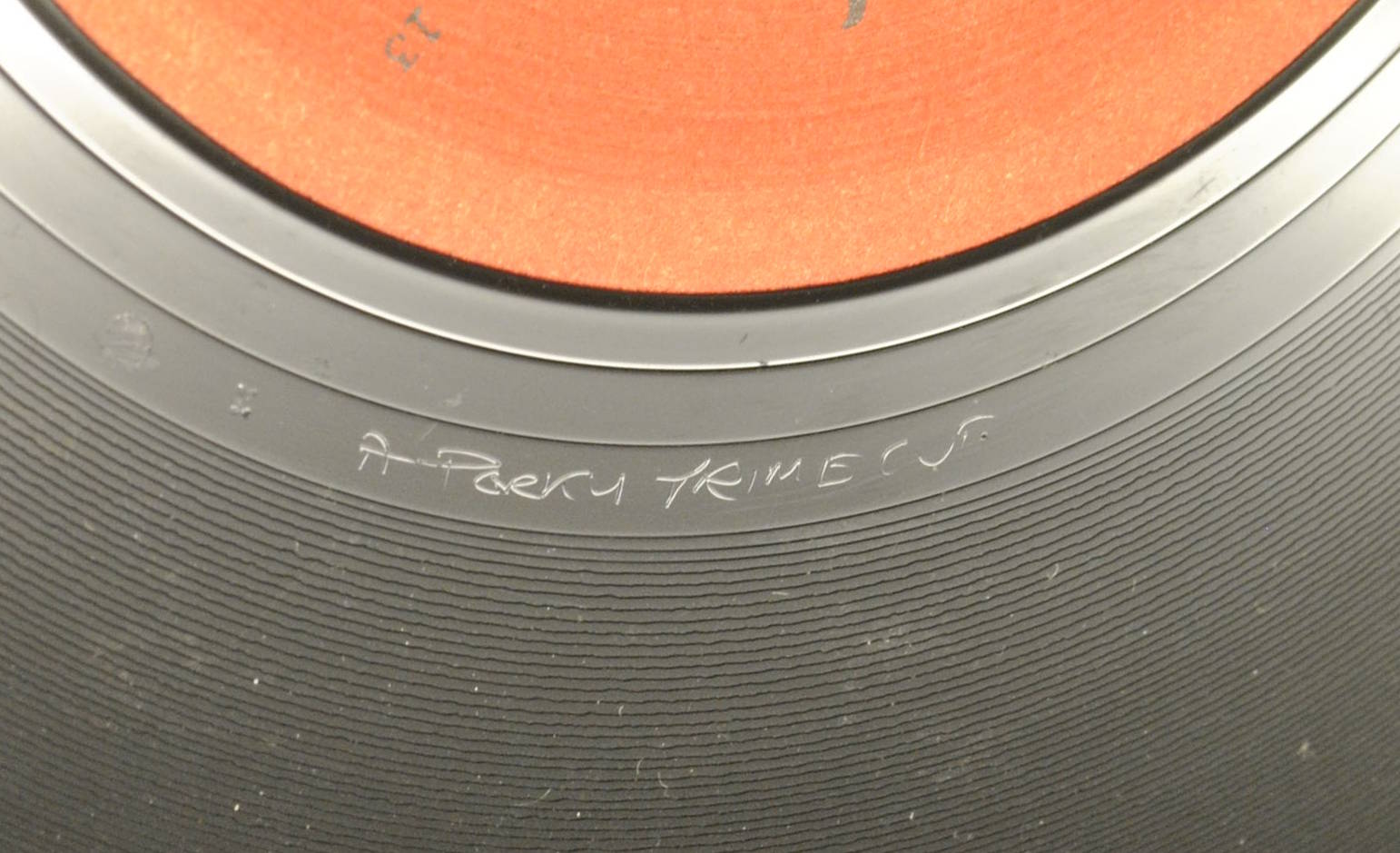
There are a few less well known charms too, like run-out groove etchings. One of the most famous that appears on a lot of records, is this.

A Porky Prime Cut
A Porky Prime Cut

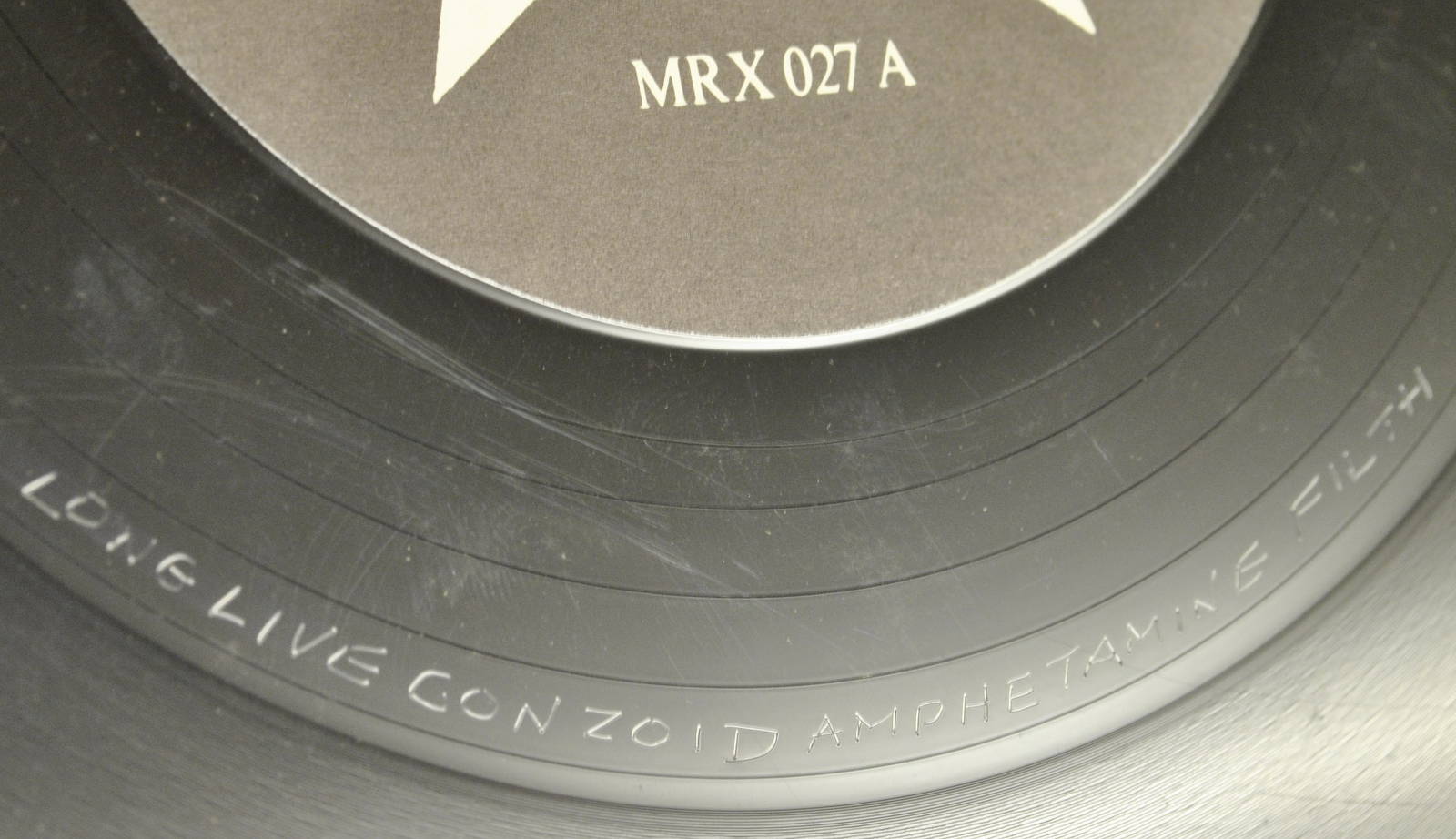
“A Porky Prime Cut” is the signature of renowned record cutting engineer George Peckham. Quite often the band themselves get in on the act too, often with weird and cryptic messages. One of the most notorious is the run-out groove etching on the Sisters of Mercy’s 1983 Temple of Love original 12″ single. I think we can safely assume that they were not fans of the temperance movement.

Sisters Temple '83

Clearly it’s not worth buying a load of vinyl and forking out a small mortgage for a top quality record deck. Vinyl is easily damaged, it wears out, it’s inconvenient to store and to play and it weighs a ton. But it has a charm than CD and MP3 simply don’t have and for that reason alone I love it.

#if Programmer Is Forgetful

Reading Time: 2 minutesHere’s a trick that I use quite a lot…

#if DEBUG
    DumpCallStack();
#else
    #error REMOVE BEFORE RELEASE - Tom added this looking for bug 1223
#endif

Lily the Cat
You Really Don’t Want To Upset Her…

Why on earth would anyone want to do that? Well sometimes when you’re looking for a bug you add either debugging code or experimental code that you think might fix the issue. This code is often not of production quality. Then you find the actual bug and it’s nowhere near the new code, or you have to go off and do something else. You then forget about the code that you’ve added, it gets checked in and eventually makes it out into a release. Then you end up with Ariane 5 when it hits the customer site…

So why not just wrap it in #if DEBUG?

There are 2 reasons;

  1. Because over time you end up with a hell of a lot of #if DEBUG and your actual code gets difficult to read.
  2. More importantly because your debug version starts to radically depart from the release version. Consider the above – generating a stack trace is a relatively expensive operation and ultimately this writes it to a file. This quite substantially alters the way the timings in the code and the write to file has some (limited) synchronisation effects. This could actually mask problems.

Ultimately the more similar the debug version is to the release version the maintainable the code is and the more chance there is of a problem being spotted before the code gets to the customer. Experimental code and any form of debug code that could cause the debug version to function significantly differently to the release version should be removed.

Linux Equilibrium

Reading Time: < 1 minuteSomewhere in YorkSEED Software is fairly heavily Microsoft orientated. It’s no secret that I’m a fan of Linux, indeed I started my career as a *nix developer. In 2000 though I was looking for my next career move and there just weren’t enough opportunities in the *nix world, so I jumped ship and became a Windows developer. Since then Linux has had to take a back seat.

However I recently ordered a new NAS and a Raspberry Pi. This means that I currently have;

  • My main workstation (Windows 7)
  • A backup workstation (Windows 7)
  • A SQL Server (Windows 2008 Server R2)
  • A Windows 8 Test Machine
  • A Windows 7 Test Machine
  • A Windows 7 laptop

But I also have;

  • A Linux dev / test machine (running Gentoo)
  • An Android smartphone (HTC Wildfire S running Cyanogen)
  • A (Linux based) ADSL router
  • A backup (Linux based) ADSL router
  • A (Linux Based) NAS
  • A Raspberry Pi

For the first time since 2000 I have got as many Linux machines as I have Windows, possibly more as there are other pieces of hardware that I have which could also be Linux based – I’m looking suspiciously at my TV for starters…

The downside of all this is that I think I may have just blown any pretence I might have had that I am not a geek. Hom hum, I can live with that!

Acts of Technological Faith

Reading Time: < 1 minute

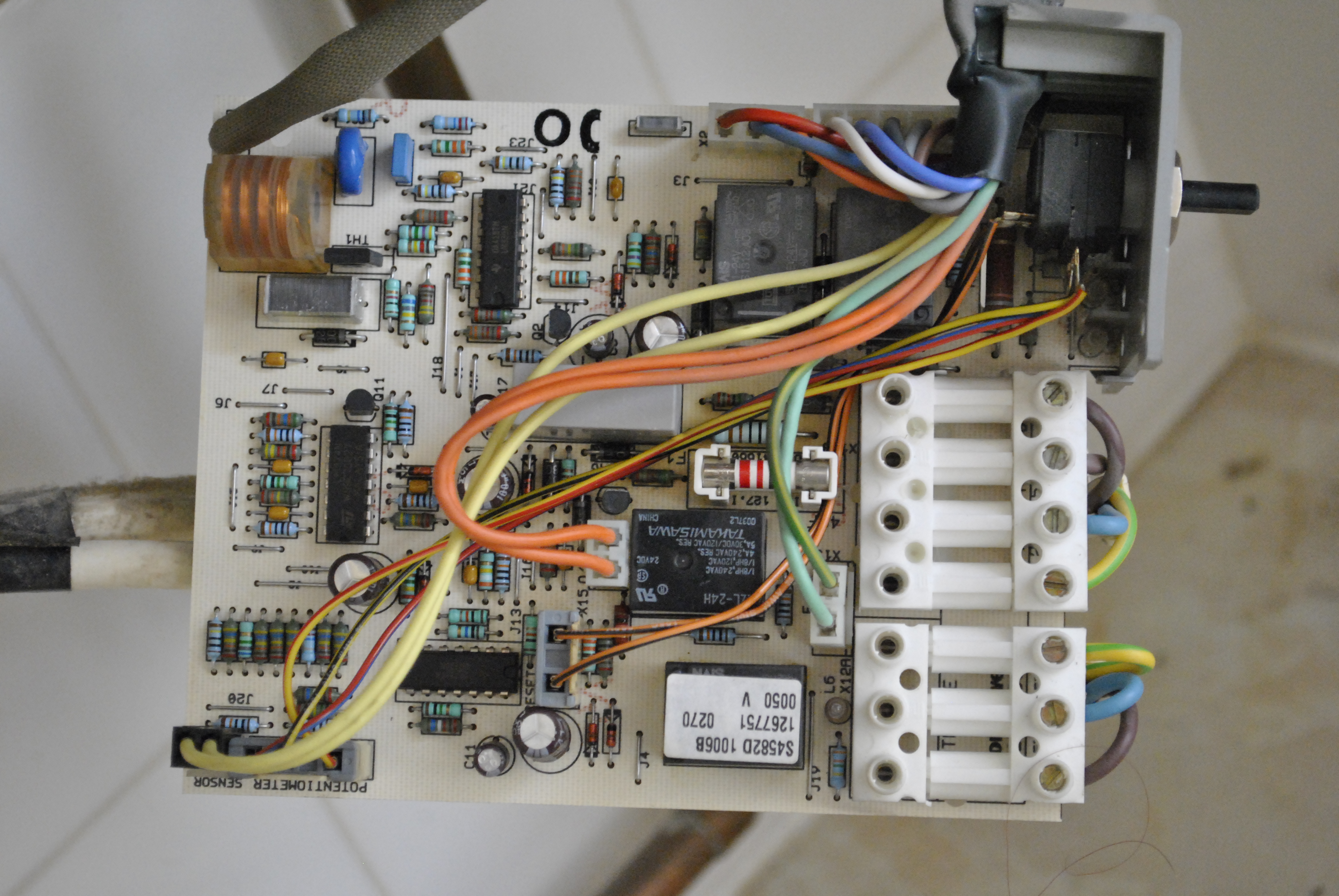
Boiler Mainboard
Boiler Mainboard

We’ve all visited the temple of the Great God Rebootus – praying that a magic key sequence or just turning it off and back on again will solve our problem.

When my boiler stopped working last night though the Great God Rebootus didn’t come through for me. So before I phoned the plumber I thought I’d just give another ancient ritual a shot – it works surprisingly often.

It’s called Reseatum Konnectorum – the basic procedure is to unplug and reconnect every connector you can find. Corrosion, vibration, there are all sorts of reasons why something that was once a good connection can go bad. It’s well worth giving it a shot, especially when you’re facing a big bill just for calling someone out to look at it.

So I now have a working boiler again. Fingers crossed it will continue to do so!

Google’s Web Cache – Not Good For Bloggers

Reading Time: 2 minutesParis UndergroundI’ve stopped Google from caching this blog, it’s the only logical option.

Things change, circumstances change, events happen, our opinions change. The web though appears timeless, an article written 10 years ago can easily crop up in a search today and nobody reads the date. The advice that one might have given 10 years ago however may be entirely contradictory to the advice one would give today. The opinions expressed before the current recession may be entirely at odds with today’s. The conclusion we inevitably come to is that being able to edit and delete an article is really rather important.
Not only this but from a purely selfish point of view we might need to delete or edit articles – imagine writing an article that praised a particular company only to find out later that your own company was being taken over by one of their competitors. If the first time your new managers hear of you it’s because someone is telling them you’ve written an article supporting the opposition that stain is going to be difficult to remove from your reputation.

Articles can hang around in caches for a very long time after they’ve been taken down or edited on the original site. I’ve found myself writing articles and not publishing them simply because of this – I think to myself that I may change my mind about the subject at some point, or that the article is pertinent only to the world that exists today. So it’s a no-brainer for me and I would suggest any blogger, if you want to say anything that you may ever have cause to change or delete later, you have to try to stop it being cached.

Error Politics

Reading Time: < 1 minute

A Snowy Day in the Village

My television offended me last night. No, not a television programme the actual TV. We haven’t quite got the networking in the house finished so I put a video file I onto a memory stick and shoved it into the telly’s USB port.

“Invalid File Format”

It told me. So I fetched a laptop, plugged that into a spare HDMI port and guess what – it played the file fine.

This may seem like a trivial issue but it does highlight just how exposed we as programmers are to the user. Errors are a particular area of concern because the marketing people will agonise for hours about exactly what the splash screen should look like, but they rarely have any input at all on what error messages should say.

Being able to provide the user with error messages that are useful and informative can greatly improve the user perception of the product – so when you’re writing error messages just have a think about how a user will react if they see it. Exception.ToString() might not be terribly useful to them, for instance.

Pragmatism For Fun and Profit, but Mostly Profit

Reading Time: 3 minutes

Power cut!
Power cut!
Beautiful design is great, but more often than not it doesn’t pay the bills. Pragmatism is one of the things I try to instil in the SEED students. There’s a time for complicated diagrams with lots of lines and boxes, there’s a time to elegantly partition the layers, but there’s also a time to ‘it it wiv an ‘ammer.

I was recently dealing with some simple comms routing. I needed to store information about an address composed of 3 parts;

  • Sector – a byte in storage this identifies the organisation to send the message to.
  • Node – 10 bits denoting the unit to send to, e.g a Fire Station or Fire Appliance (Engine)
  • Port – a byte indicating the application to send to, e.g. the printer

The information that I needed to associate with this address was actually an email address that it translated to. So it’s an obvious tree structure, right? What’s more you can use an XmlSerializer to save and load the relationships – this is important because it needs to be maintained by a human. So let’s look at the XML.

<Sectors>
  <Sector SectorNumber="0">
    <Nodes>
      <Node NodeNumber="0">
        <Ports>
          <Port PortNumber="0">
            <EmailAddresse>postmaster@localhost</EmailAddress>
          </Port>
        </Ports>
      </Node>
    </Nodes>
  </Sector>
</Sectors>

Oh dear, that’s not very good. There could easily be a couple of hundred entries which would mean that the sector you’re editing might not be in view, similarly the node. It’s all a bit untidy really.

Also lookup isn’t simple, you need to do it in 3 stages, find the Sector, then find the Node, then find the Port. So the XML is untidy and the code is untidy. But the design is good, yes?

There’s a better way. I realised that 8 bits + 10 bits + 8 bits is 26 bits and a standard csharp integer is 32 bits. So we can just have one object that has Sector, Node and Port properties but has a "lookup" value that is an int and is made up from the parts of the address.

    [XmlElement]
    public class AddressRelation
    {
        [XmlAttribute]
        public byte Sector { get; set; }
        [XmlAttribute]
        public short Node { get; set; }
        [XmlAttribute]
        public byte Port { get; set; }
        [XmlAttribute]
        public string EmailAddress { get; set; }
        
        //so that we can get a lookup code, for comparison
        public static int GetLookupCode(byte Sector,short Node,byte Port)
        {
            return Sector << 24 | Node << 8 | Port;
        }

        public int GetLookupCode()
        {
            return AddressRelation.GetLookupCode(Sector, Node, Port);
        }
       
        //this makes serialization much easier
        public static AddressRelation CreateFromLookupCode(int LookupCode,string email)
        {
            return new AddressRelation() 
                { Sector = (byte)(LookupCode >> 24), 
                    Node = (short)((LookupCode >> 8) | 0xffff), 
                    Port = (byte)(LookupCode | 0xff) };
        }
    }

That’s great. When we call “GetLookupCode()” we get an int that uniquely represents that address. We can easily compare that with other objects.
Note that I didn’t override GetHashCode() or the equality operator because although the addresses might be the same, the emails may be different.
If you’re wondering what >> and << do then you need to look up bit shifting and bit masking…

They serialize nicely, too.

<AddressRelations>
    <AddressRelarion Sector="0" Node="0" Port="0" EmailAddress="postmaster@localhost0" />
    <AddressRelarion Sector="0" Node="0" Port="1" EmailAddress="postmaster@localhost1" />
    <AddressRelarion Sector="0" Node="0" Port="2" EmailAddress="postmaster@localhost2" />
</AddressRelations>

But how do we use it? Well actually the easiest thing to do is to load it into a dictionary, which should make the uses of some of the extra methods in the data class clearer…

    [Serializable]
    [XmlRoot(Namespace = "www.tomfosdick.com/blogstuff",
     ElementName = "AddressStore",
     IsNullable = true)]
    public class AddressLookup2
    {
        [XmlArray("AddressRelations")]
        public AddressRelation[] AddressRelations
        {
            get
            {
                return addressLookup
                    .Select(x => AddressRelation.CreateFromLookupCode(x.Key, x.Value))
                    .ToArray();
            }
            set
            {
                addressLookup = value
                    .ToDictionary(k => k.GetLookupCode(), v => v.EmailAddress);
            }
        }

        private Dictionary<int, string> addressLookup = new Dictionary<int,string>();

        public string GetAddress(byte sector, short node, byte port)
        {
            string result;
            if(addressLookup.TryGetValue(AddressRelation.GetLookupCode(sector, node, port),out result))
                return result;
            return null;
        }
    }

The advantage of using a Dictionary here and of the way I’ve shuffled the parts of the address into an int means that this will always be serialized in order, Sector most significant then Node then Port. So editing the XML by human hand will be easy – even if one is added out of sequence when the file is next machine written it will be sorted again.

The code is neat, concise and fast. The design is a bit mucky, it’s not clean and elegant but in all other ways – some of which are far more important than the cleanliness of design – this wins.

The Last Remnant of 1993

Reading Time: 2 minutes

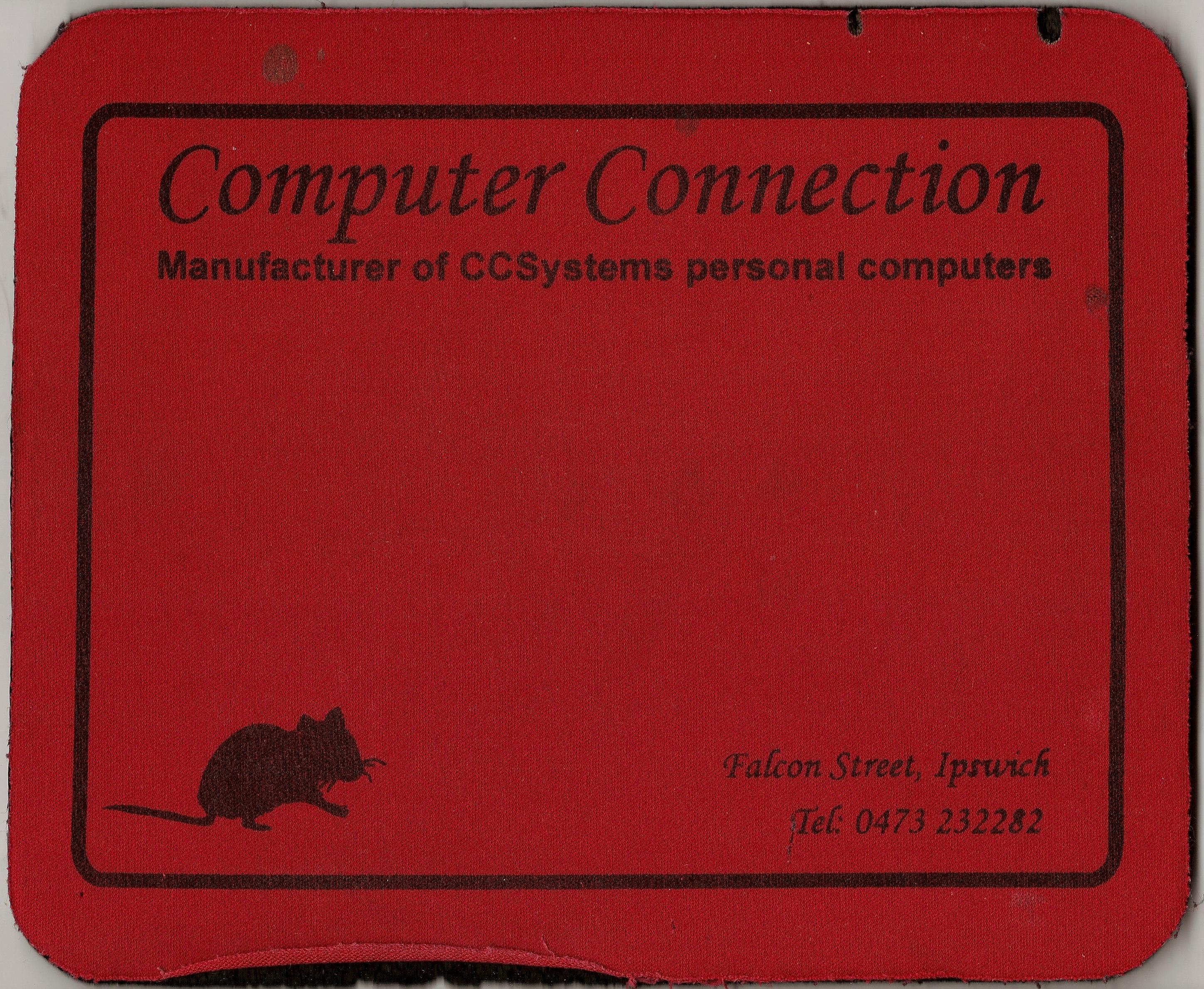
Computer Connection Mousemat
From the depths of history…

This is my mousemat. It’s about the same age as many of our students and it’s pretty much the only piece of computing technology from 1993 that’s still relevant today.

  • The 3.5 inch floppy was the standard way of supplying data and even software. Windows came on 6 to 8 of them depending on the edition.
  • Mice used to use a ball and rollers to track movement. They’re now optical.
  • Only cheap keyboards used membranes. Good ones were mechanical (switch) keyboards. These are now almost impossible to get hold of.
  • USB was unheard of. Peripherals either had to connect via an existing serial or parallel port or use their own interface card.
  • The Compact Disc was common, but the CD-ROM had not yet entered the world of computing (let alone DVD or recordable technology).
  • Monitors used Cathode Ray Tubes. This made anything bigger than 19″ heavy, awkward and expensive. If the office heating failed though they were good for that.
  • A myriad of interfaces have come and gone. ISA bus, VESA local bus, DIN style keyboard connections, PS/2, IDE, etc. etc.

There are a few things that haven’at changed that much.

  • Hard disks – the mechanical type – still use much the same physical technology. The data capacity now though is astounding. A “big” HDD in 1992 was 20Mb. It’s now 50,000 times that.
  • VGA was the latest and greatest in 1992. We still use it today, mainly for projectors although even this is fading in favour of DVI / HDMI.
  • Cases are still made of cheap steel and PSUs are still cheap switch-mode devices that fail every  more often than any other component.

Having said all this it’s not so long ago I lifted the lid on a piece of equipment that had just been decommissioned from a fire service. I recognised the CPU instantly, it was a Zilog Z80 in a DIL40 package, placing its vintage firmly in the 1980s and possibly as early as 1976.